
It’s ALA Youth Media Award season! The Caldecott and Newbery (among many other medals) will be announced next Monday, and I’ve got award winners on the brain.
Is there an award-winning book you loathe that everyone else seems to love? For me, it’s The Tale of Despereaux, which turned 20 last year to yet more critical acclaim. The story follows a brave, outcast mouse on a mission to save a beautiful human princess from the rats. Most librarians I know love this book.
Here’s why I hate it.
Content Notes: Ableism, Body Shaming, Child Abuse
I’ve had significant hearing loss from a young age. I’m always on the lookout for books with characters that share my lived experience. These books are few and far between. One DHH (Deaf and Hard of Hearing) side character plays a pivotal role in The Tale of Despereaux: the serving girl, Miggery Sow.
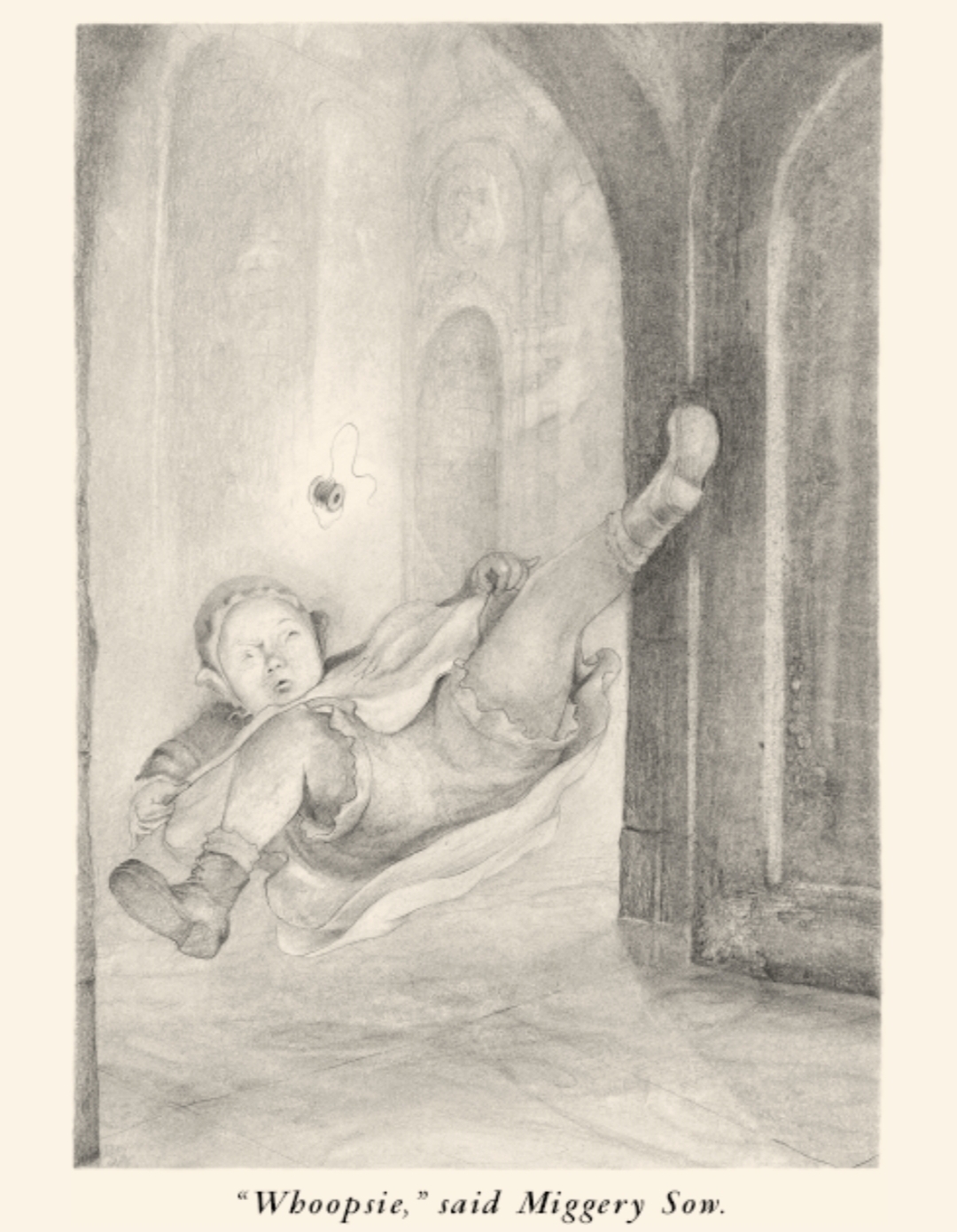
Miggery (Mig for short) is described as a young girl with cauliflower ears. DiCamillo makes a point to mention this physical attribute in almost chapter in which Mig makes an appearance.
Why are Mig’s ears so misshapen? Because her so-called Uncle beats Mig on a regular basis:
So it was that after a time, the young Mig’s ears came to resemble not so much ears as pieces of cauliflower stuck to either side of her head.
And they became about as useful to her as pieces of cauliflower. That is to say they all but ceased their functioning as ears. Words, for Mig, lost their sharp edges. And then they lost their edges altogether and became blurry, blankety things that she had a great deal of trouble making any sense out of at all.
The less Mig heard, the less she understood. The less she understood, the more things she did wrong; and the more things she did wrong, the more clouts to the ear she received, and the less she heard (Chapter 25).
The man called Uncle literally beats Mig to partial deafness and anosmia (the loss of smell). After being sent to the castle, Mig continues to receive regular clouts from the castle cook. None of the other characters ever protest Mig’s treatment, not even the knight who takes Mig away. The knight removes Mig from the man called Uncle solely because “no human may own another in the Kingdom of Dor” (Chapter 28).
I found this casual child abuse both personally triggering and completely unnecessary to the plot. In my opinion, if you’re going to have adult characters smack your DHH child character around, the least you can do is address child/disability abuse in your author notes.
In case you missed the clue in the character’s name, DiCamillo explicitly refers to Mig as “the fat serving girl” (Chapter 46). Get it? Miggery Sow is fat. Because fat people are pigs, obviously. 🤬
Here’s how DiCamillo describes Mig gorging herself when she arrives at the castle:
At the castle, for the first time in her young life, Mig had enough to eat. And eat she did. She quickly became plump and then plumper still. She grew rounder and rounder and bigger and bigger. Only her head stayed small (Chapter 30).
DiCamillo also describes Mig as “the tiniest bit lazy” and “not the sharpest knife in the drawer” and “slow-witted” (Chapter 30). Writing your sole disabled character as stereotypically fat, lazy, and dumb is one hell of a choice.
Mig often replies “eh?” or “what?” when interacting with other characters, cupping a hand round her ear to try and hear better. She repeats words incorrectly – e.g. castle becomes paddle, curtsy becomes cursy, old becomes bold, etc. This representation of hearing loss rings true, at least in my personal experience.
“Gor,” said Mig, looking around the wagon in confusion. “You want me to paddle?”
“To the castle!” shouted the soldier. “I’ll take you to the castle.”
“The castle? Where the itty bitty princess lives?”
(Chapter 28)
Like in the scene above, DiCamillo often uses Mig’s misunderstandings as comedic relief. Let me tell you, misunderstanding words because you can’t hear people isn’t funny. It’s frustrating on both sides.
The other characters typically resort to shouting at Mig to get their point across. The louder they shout, the better Mig seems to hear them. This isn’t actually how most hearing loss works! Talking at a slightly louder volume can help. Shouting (or speaking with exaggerated slowness) makes things worse because it grossly distorts the sound. Something DiCamillo might have known, had she used a DHH sensitivity reader… or even done a simple Google search.
When I searched, I found only one critical review of the DHH representation in the Tale of Desperaux. Cowan addresses a completely different issue – the “miracle” that Mig can hear the rat Roscuro.
Roscuro’s voice was pitched perfectly to make its way through the torturous path of Mig’s broken-down, cauliflower ears. That is to say, dear reader, Miggery Sow heard, perfect and true, every single word the rat Roscuro uttered (Chapter 33).
Again, this isn’t how hearing loss works, or at least not mine. Yes, there are certain sounds that can be heard better than others, but there is no “perfect and true” pitch, particularly not for someone with as much hearing loss as Mig seems to have.
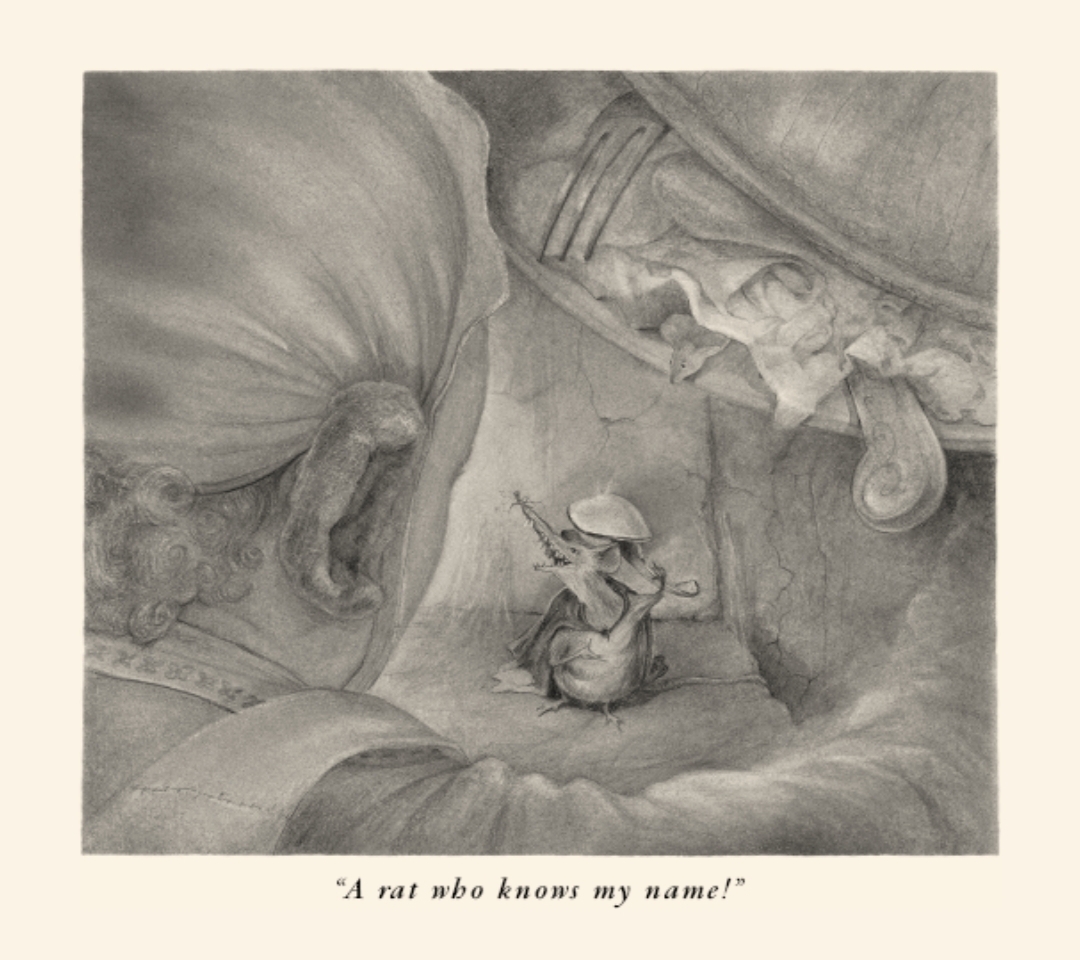
Mig’s deafness could have made her impervious to Roscuro’s manipulations. Instead, “DiCamillo seemed to realize at some point that Mig’s deafness prevented the story from going in the direction she wanted it to, so she proceeds to make Mig’s deafness a non-issue instead of figuring something else out,” Cowan says. “That’s the trouble with mixing magical cures and disability!”
Looking for #KidLit that gets disability rep right? Check out these additional resources:
Anti-Defamation League
Evaluating Children’s Books that Address Disability
American Library Association
Schneider Family Book Award
(Although, as we just established, award stickers aren’t everything…)
Book Riot
The Current State of Disability Representation in Children’s Books
Social Justice Books
Disability Book List
No post about DHH representation in children’s literature would be complete without recommending Ann Clare LeZotte’s incredible Show Me a Sign trilogy. Ann Clare LeZotte is an award-winning author and a Deaf librarian. Check out Ann’s interview with We Need Diverse Books and be sure to buy her books!


 Storytime in the Stacks
This is a fantastic analysis of the general ableism throughout Tale of Despereaux! 👏👏👏
So many award-winning and acclaimed books are praised for terrible disability rep, even with all the resources available to authors and publishers today. I’m torn between pity for the ignorance and irritation at the carelessness virtually every time I come across one!
I still need to read the next two books in LeZotte’s trilogy, so at least I have something to look forward to!
LikeLiked by 1 person
Thank you for your kind words! I loved your review and could not have said it better, hence why I quoted you so much. 😁
I appreciate all the work you are doing to advocate for change in publishing! I’m really looking forward to more of your post-pub sensitivity readings this year.
LikeLiked by 1 person
Of course! And thank YOU!
I’m planning to post another post-pub sensitivity reading next week (or end of February, if I miss my self-set deadline lol). It’ll be on Rick Riordan’s Magnus Chase trilogy, one of my most bitterly disappointing reads.
If there are any stories for post-pub SR in particular you’d like to see, just let me know!
LikeLiked by 1 person
Oooh I haven’t read Magnus Chase! I will eagerly await your thoughts. 👀
LikeLiked by 1 person
Wow! This is so fantastic, thank you for sharing your thoughts on this book – my mother lost her hearing on one side many years ago, and I’ve seen how frustrating and exhausting it can be for her, especially in crowded or noisy environments. There’s nothing funny about it.
LikeLiked by 1 person
Thanks Jane! I was a little worried librarians might come after me with pitchforks, lol. DiCamillo has a dedicated fan base!
LikeLike
While criticizing Kate DiCamillo is often seen as choosing violence (haha!), you have *very* excellent points about this book and Mig’s character.
“The Tale of Despereaux” came out when I was in library school, and many of us in the class were horrified when our children’s literature professor said it was a terrible book that didn’t deserve the Newbery it had just won. We were shocked, and I remember writing off her criticism in my very-undiverse worldview and because her book recommendations were often very outdated and based on her own nostalgia. Nevertheless, looking back, I agree with her (and you) on Despereaux.
The same could be said of the entire Mercy Watson series IMO…every character it is so stereotypical (and somehow all of Deckawoo Drive is portrayed as white)? I find DiCamillo’s writing is very good at getting an emotional reaction out of adults…but I haven’t seen much of her work have the same effect on children. Her books were featured HEAVILY in our district’s ELA curriculum, and besides the Raymie Nightingale series, students weren’t interested in reading her other books.
LikeLiked by 1 person
Thanks Collette! I have wondered about how many kids actually *like* Kate DiCamillo. Usually it’s adults asking me for her books, not kids themselves. I haven’t ever read the Mercy Watson books – yikes!
Thank you for stopping by and for your comment!
LikeLike